

“Food is not rational. Food is culture, habit, craving, and identity.”
Food is a fundamental need in everyone’s life. We live to eat and strive for better health and a better life. Consuming nutritious food contributes to our overall well-being, making us healthier and happier individuals. It’s often said that food is the third most important thing for survival, after air and water.
Many people choose homemade food over restaurant meals because it’s healthier and cleaner. Homemade meals are often made with fresh ingredients, giving you peace of mind about what you’re eating.
When you sell homemade food in 2026, you not only provide a better option for others but also take the first step toward starting your own business. This journey can be both fulfilling and profitable. According to Statista, the online food industry is growing at a massive pace, and experts predict it will cross the $2 trillion mark worldwide by 2030.
If you love cooking, have skills in the kitchen, and dream of selling food online from home 2026 but feel unsure about how to start with the numerous options, then this blog is for you. We’ll guide you through easy steps to begin selling food online from home 2026.
First, we will outline the essential steps required to successfully sell food online while ensuring that your business is legal, safe, and profitable. It is crucial to follow each step carefully to avoid legal issues and ensure customer satisfaction.
There are a few things to be required while starting any business. We can not start directly any business. There is a lot of research required to start any successful business.
Requirements depend on your niche business. Currently, we are focusing on the food business so we are going to share with you the requirements based on the same. You should copy or note down the required details as we mentioned below.
Now we are going to share with you the steps regarding How To Sell Food Online from home 2026 with some easy steps.
So follow the steps and start your food business journey easily. We are giving you a quick overview of steps and then we will walk through each step in detail.
The first step in selling food online is to gain knowledge about general food laws. Once you get the knowledge about food laws and regulations, it will be easier for you to go ahead.
Food products are classified into two categories by the Food and Drug Administration (FDA): “high-risk” and “low-risk.”
It is not important where you prepare your food (at home or in a commercial kitchen), it’s essential to familiarize yourself with local regulations. When you are choosing to work with a supplier to sell food online from home 2026, you must be aware that the supply chain is reliable and your ingredients are of good quality. If you are losing the quality of your food, You might lose your customer base.
Lastly, federal, state, and local officials are great resources for guidance. They know the laws well and can help you stay updated!
Before you start selling food online, make sure your business is legally compliant. Proper licensing not only ensures food safety but also helps build long-term trust with your customers.
From our experience helping multiple home-based food sellers go digital, we have seen that brands with clear labeling and valid licenses get approved faster on platforms like Zomato, BigBasket, and Amazon Pantry.
Here’s what you’ll need in India:
1. FSSAI license
FSSAI License (India)
Mandatory for anyone selling food—online or offline.
Basic: Up to ₹12 lakhs
State: ₹12 lakhs – ₹20 crores
Central: Above ₹20 crores / multi-state
Apply: https://foscos.fssai.gov.in/apply-for-lic-and-reg
Tip: Add your FSSAI number on product labels to build trust.
FDA Registration (USA)
Required for any facility manufacturing, processing, packing, storing, or exporting food to the US.
More Info: https://www.fda.gov/food
2. Local health permit
Issued by your city’s municipal corporation to verify kitchen hygiene and sanitation standards. Most cities like Delhi, Indore, Surat, and Bangalore require it for home-based kitchens.
3. GST registration
Compulsory if your turnover exceeds ₹20 lakhs annually or if you sell outside your state. It also helps with billing and business credibility.
4. Labeling requirements
Every product label must mention:
From our experience: Many sellers skip mentioning shelf life and allergen info, but these small details can double customer confidence.
Getting these basics right lays a strong foundation for your online food business and opens the door to bigger eCommerce opportunities.
The online food business in 2026 covers everything from homemade sweets to gourmet gift boxes. Whether you’re planning to sell healthy snacks, meal kits, or bakery treats, the secret to success lies in finding your niche, something you’re passionate about and confident in producing consistently.
From our experience at ControlF5, helping multiple home chefs and food startups build Shopify stores, we’ve seen that focusing on a specific niche first always works better than trying to sell “everything for everyone.”
Once your niche is clear, you can build branding, packaging, and marketing strategies around it.
1. Gourmet cookies & brownies (Packaged)
2. Artisan spices & seasoning blends
3. Flavored or organic honey (Packaged in Jars or Squeeze Bottles)
4. Gourmet snacks (Packaged)
5. Traditional Indian pickles or sweets (Packaged)
6. DIY food or dessert kits
No matter which category you choose, the key is to create a Shopify food eCommerce website that showcases your freshness, quality, and packaging beautifully.
With Shopify, you can easily manage inventory, automate orders, and track performance, while focusing on what matters most: your food.
Pro Tip: If you’re planning to launch your food brand online, our team at ControlF5 can help you design, develop, and market your Shopify store with features like subscription setups, delivery tracking, and custom checkout funnels for better conversions.
It is important in every business to understand your target audience, competitors, and the market you’re entering. Without knowing your customer base you will not be able to grow.
So you must think about your ideal customer. What are their interests, food preferences, and lifestyles? Which platforms—B2B or B2C—will best suit your food business? Which platform do you mostly want to work on?
Next, you need to identify your target market by conducting a SWOT analysis (Strengths, Weaknesses, Opportunities, Threats).
While everyone loves food, the key demographic for online orders is often younger, busy individuals. But depending on your niche, you can also target families, health-conscious consumers, or vegans. It can vary depending on your product.
Whether you’re preparing your food or selling premade items, finding a reliable supplier is important to start your food business from home. The challenge is determining which ones are trustworthy and reliable. You also need to focus on the quality and pricing that meets your expectations.
Platforms like Food Master can help you find vendors for your needs. Once you have a list, check their certifications and ask for references.
It’s normal to ask about a supplier’s credentials, so don’t hesitate. Remember, their products will represent your business. If a supplier claims their items are organic, be sure to verify that information. Go with the real one.
Once you have prepared the base of your business, then it’s time to build a brand to showcase in front of your users. You need to decide a few things before starting. Below are the things you need to decide, Let’s have a look:
Company Name: You need to select something memorable and relevant company name that reflects your offerings. It should be easy to read and easy to remember to your user.
Brand Colors: You have to choose the colors that show the right emotions—bright colors can be enticing, while greens and blues suggest healthiness. Color choice should be minimal.
Product Imagery: You should invest in professional photography to make your food visually appealing online. A good product showcase to your users increases the chances of buying.
Your online store is the core of your food business. It’s where customers browse products, understand your brand, and place their orders. A simple, well-planned Shopify store helps build trust and makes the buying process smooth and enjoyable.
If you’re new to Shopify and unsure where to begin, you can follow our step-by-step guide to build your Shopify store, from setup to sales, with ease and confidence.
Below is a refined, easy-to-understand structure for your food business website:
1. Landing page (Home Page)
Your homepage should instantly communicate what you offer and guide visitors to start shopping.
Must-have elements:
A clean homepage helps customers quickly understand your brand and take action.
2. Shop page (All Products)
This page lists all your food items in one place, so it must be very easy to navigate.
Key features:
A well-structured shop page reduces confusion and improves conversions.
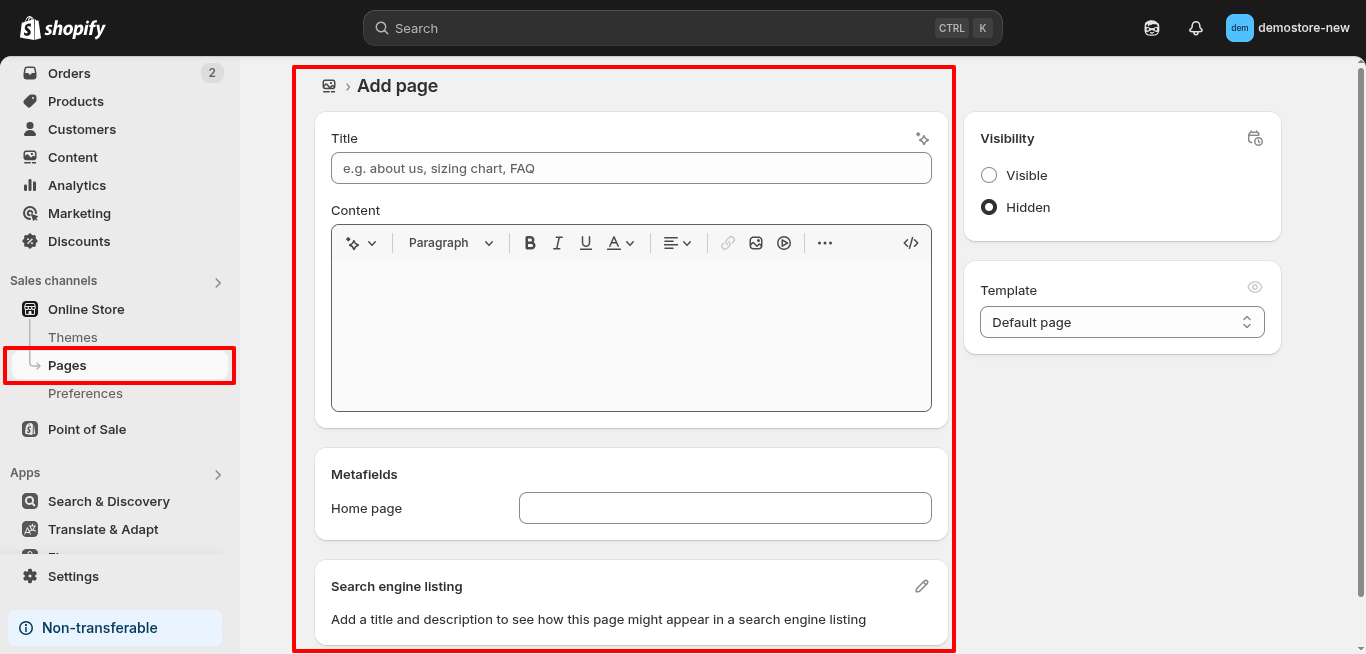
3. Product pages (Individual Product Details)
Food purchases depend on trust. Your product pages must give customers every detail they need.
Include:
The more transparent you are, the easier it is for customers to make a confident purchase.
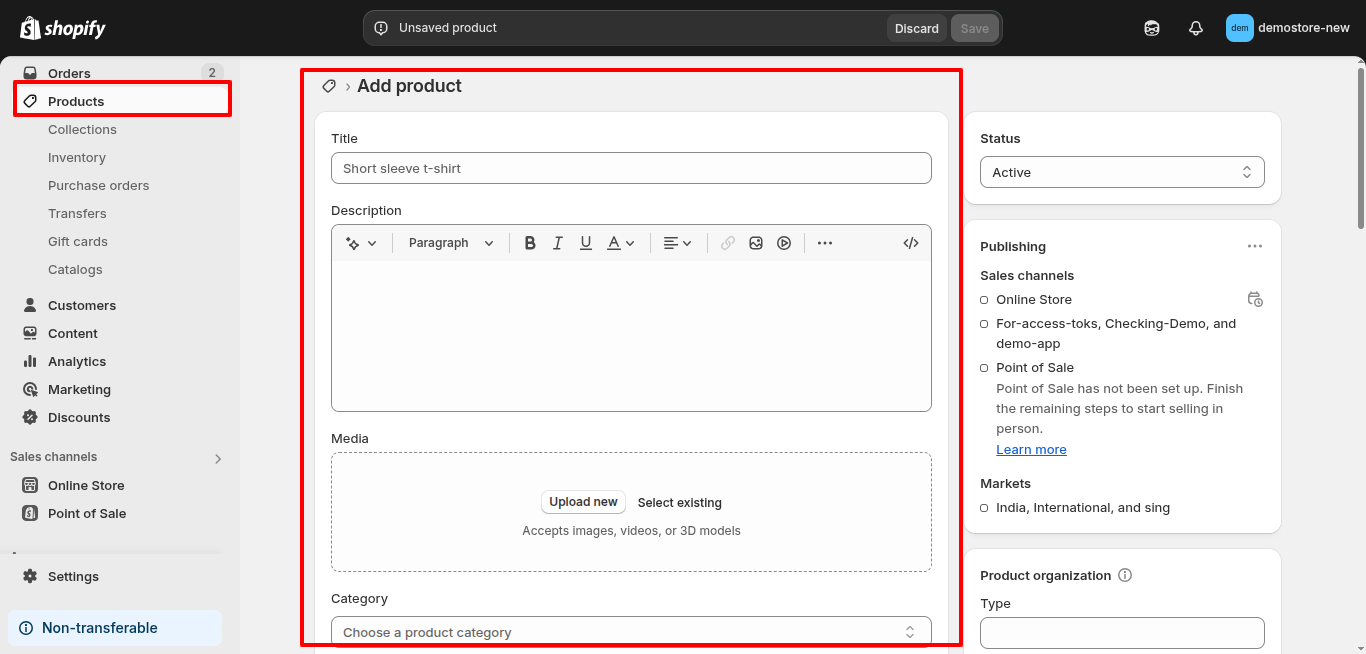
4. About us page
This page shows the heart of your brand.
Share:
Why you started your food business
What makes your products unique (fresh, homemade, gourmet, preservative-free)
Your commitment to hygiene and quality
Customers connect better with brands that feel real and trustworthy.
5. Contact us page
A strong contact page reassures customers that help is always available.
Add:
This builds credibility and reduces hesitation to order.
6. FAQ section
FAQs save time and answer common customer questions instantly.
Useful topics:
Clear FAQs reduce customer support queries and increase conversions.
7. Certifications & food safety badges
Food buyers look for safety and hygiene assurance.
Display badges like:
These create immediate trust, especially for new customers.
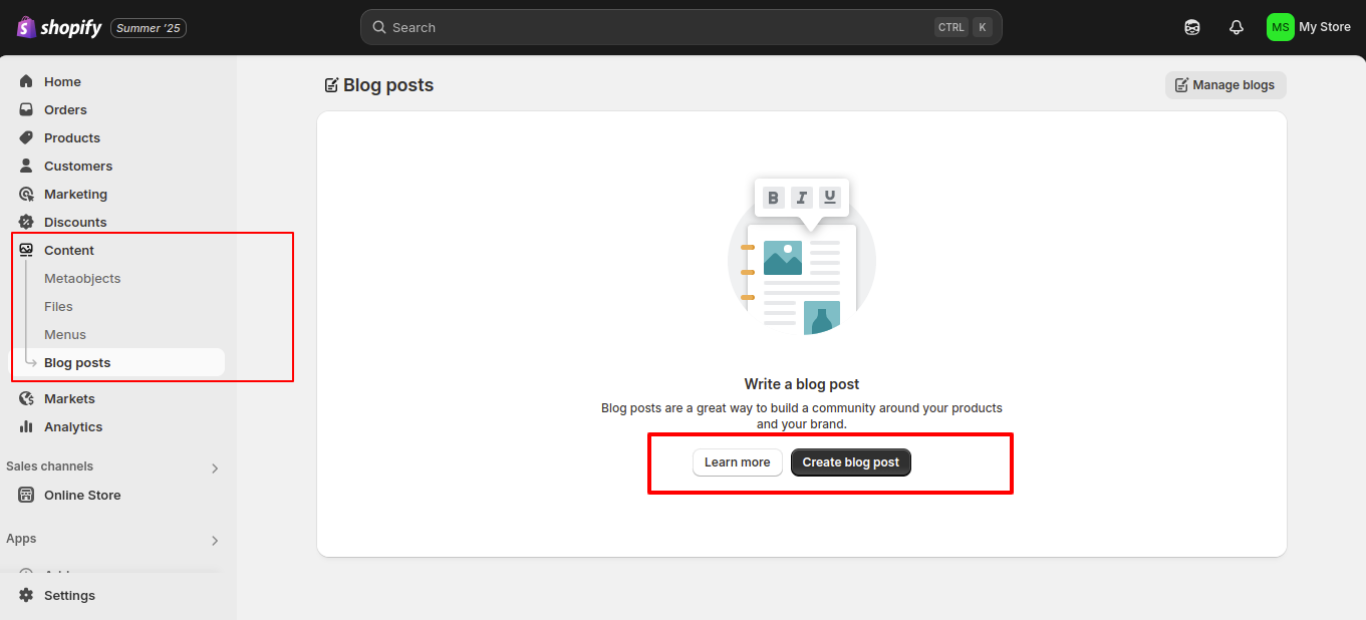
8. Blog page
Your blog helps educate customers and attracts organic search traffic.
Great topics include:
Blogs help build authority and bring long-term traffic.
9. Lead capture elements (Pop-ups & Sign-up Bars)
These convert visitors into repeating customers.
Offer:
Collecting emails helps with future promotions and customer retention.
Food delivery can make or break your brand. If your cookies arrive crushed or your pickles leak, trust is lost instantly.
Here’s how to manage it professionally:
At ControlF5, our team helped a homemade sauce brand automate packaging and shipping through Shopify, reducing manual errors by 70% and improving delivery timelines.
You can also explore some of the best Shopify shipping apps to simplify courier tracking, automate label printing, and ensure faster deliveries for your food business.
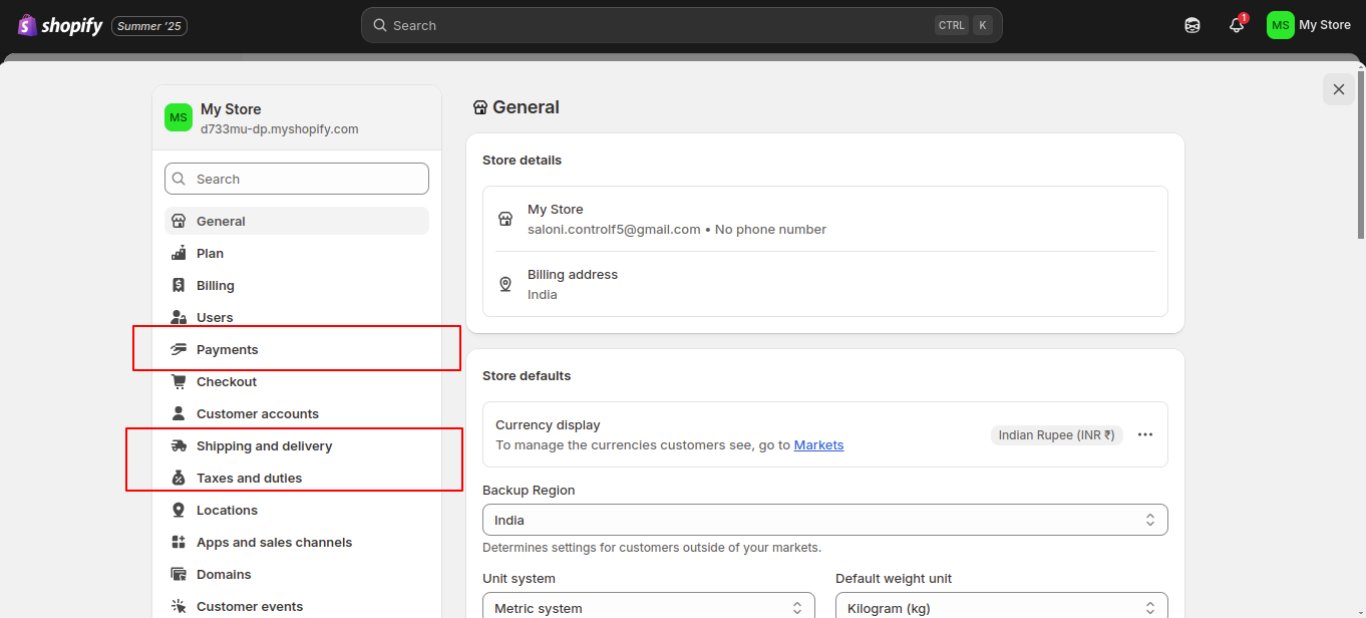
Pricing your food right is both an art and a calculation. Always factor in:
Payment gateways like Razorpay, Cashfree, and Stripe make transactions smooth and secure.
Always include a clear refund and replacement policy, it builds credibility and prevents disputes.
Pro Tip: Display your freshness or satisfaction guarantee on product pages. It instantly increases customer confidence.
To make your returns smoother, check out our guide on the best Shopify return and exchange apps, perfect for food brands offering replacements or quick refunds.
Once your food products are packaged and your online store is live, it’s time to get the word out. Effective promotion is key to generating traffic, building your brand, and increasing sales.
Here’s how to promote your food business online:
1. Leverage social media marketing
Platforms to focus on: Instagram, Facebook, Pinterest, and YouTube.
Why it works: Food is visual. High-quality images and videos of your products can go viral or attract engagement.
Tips:
2. Run paid ads (Facebook & Google)
3. Build an email & SMS marketing list
Using GoHighLevel can replace Mailchimp or Klaviyo, saving you hundreds monthly while streamlining your marketing.
4. Collaborate with influencers or food bloggers
5. List your products on marketplaces
Expand your reach by selling on Amazon, Etsy (great for gourmet, handmade foods), BigBasket, Swiggy Minis, or other local grocery platforms (if applicable).
6. Start a blog & optimize for SEO
Write about topics like:
This builds organic traffic and showcases your expertise.
Need help? Our team at ControlF5 can help with blog creation, SEO, and Shopify/WordPress content strategies.
7. Use local listings & Google my business
8. Offer promotions & loyalty programs
Social proof builds credibility faster than ads. Encourage your customers to:
Featuring customer favorites or influencer mentions on your website can boost conversions by 10–15%, as we’ve seen with several ControlF5 clients in the food niche.
You can boost credibility with the best Shopify product review apps, perfect for food brands built on trust and word-of-mouth.
These brands prove that with the right niche, packaging, and branding, a food business can scale quickly using Shopify.
At ControlF5, my team and I have worked with several food and lifestyle brands, including ProMunch, SoulTari, and Katkare, helping them design, develop, annackd scale their Shopify stores successfully.
From optimizing conversions for healthy snack brands to crafting seamless mobile-first layouts for wellness and nutrition products, we have seen how the right mix of clear visuals, smart SEO, and automation tools like AiTrillion can transform online performance and customer engagement.
| Brand Name | Category | Focus Area | Result After Shopify Optimization |
| ProMunch | Protein-rich healthy snacks | Conversion optimization & loyalty setup | 1.5% → 4.8% conversion rate |
| SoulTari | Authentic Indian street food | UI/UX redesign & SEO growth | 3,000 → 12,000+ monthly visits |
| Katkare | Healthy nutrition for cats | New Shopify build + content strategy | Nationwide reach via Shopify + Shiprocket |
Each project taught us an important lesson: customers don’t just buy food; they buy trust, transparency, and experience.
By combining thoughtful design, strong storytelling, and reliable delivery systems, our clients built loyal audiences who keep coming back for more
Our takeaway: With the right Shopify setup, AI-driven tools, and focused content strategy, even a small homegrown food brand can scale into a growing D2C business in months, not years.
Building your own online food business from scratch can be challenging and rewarding to achieve your dreams. To build a successful business, you have to work on all the factors. You cannot lag behind even a single step. When you have the right elements in one place —a responsive website, a good niche, competitive pricing, and proper brand marketing —you’re already on the right track to building an online business.
At ControlF5, we can help you kickstart your dream of selling food online from home 2026. You can also hire a Shopify development company to create an e-commerce store that truly stands out. We have an experienced team of Shopify experts who will help you to build your e-commerce store.
With our Shopify Mobile App Builder, transforming your online store into a mobile app is simple and efficient, allowing your customers to shop easily from their mobile devices anytime, anywhere.
If you are looking to build another e-commerce business such as a clothing, online gift store, Home decor, or Jewelry business, but you don’t know how to start, So don’t worry.
We have also covered similar topics regarding how to build a successful e-commerce business in different categories in the growing market. We are giving you a list of topics that you can also go through if you are looking for the same. Please have a look below:
If you have any issues or if you don’t know how to build an e-commerce website, then you can contact ControlF5 company. We will help you with building a responsive e-commerce website based on your requirements and budget that helps to save you time.
1. Can I make food at home and sell online?
Yes, you can sell homemade food online by following local food safety regulations and using an eCommerce platform like Shopify to manage sales and deliveries.
2. What is the best eCommerce platform for selling food online from home?
Shopify is the best platform; it’s easy to set up, supports payments, inventory, and shipping, and helps you grow your food brand professionally.
3. Do I need an FSSAI license to sell homemade food online using Shopify?
Yes, if your country requires it. An FSSAI or equivalent food safety license ensures compliance, hygiene, and customer trust for your food brand.
4. How can I manage shipping and packaging for perishable food items?
Use Shopify shipping apps like ShipStation or Shiprocket and opt for vacuum-sealed or temperature-controlled packaging to keep food fresh during delivery.
5. How can I market my homemade food business online?
Promote through Instagram Reels, influencer partnerships, email campaigns, and content marketing, to boost visibility and sales.


From my experience working with eCommerce founders and scaling Shopify stores, one thing is clear: choosing the right Shopify agencies UK brands partner with can directly impact growth, conversions, and long-term success.
Every successful Shopify Plus store I’ve worked with in Milton Keynes has one thing in common: the right Shopify partner behind the scenes.

Choosing a jewelry business name sounds simple until you actually try to do it. While working with founders at ControlF5, I’ve seen many Shopify and eCommerce jewelry stores get stuck at this exact step