Made With Manners · Yalla Toys
how two brands build multiple market and multiple language shopify experience
Setting up international markets on Shopify is the easy part. Building a checkout experience that actually converts across Dubai, Qatar, Bahrain, and the UK? That takes a different kind of thinking.
There’s a moment most Shopify brands experience when they start selling internationally. Analytics shows visitors from Dubai, Doha, Manama — but the conversion rate from those regions is sitting at 0.6%. Something’s off. Orders aren’t coming through. The traffic is real, but it’s bouncing.
Nine times out of ten, the problem isn’t the product. It’s the experience. The customer lands on a store priced in GBP, written in English, with a checkout that shows no familiar payment option and no shipping estimate they recognise. For a shopper in Dubai or Doha, that store doesn’t feel built for them. It feels like an afterthought.
This case study collection tells the story of two brands who figured this out — and what changed when they got it right.
Made With Manners — a premium Italian-made lifestyle brand — serves Dubai and the UK, bridging the Gulf’s appetite for Italian craftsmanship with British heritage shoppers. Yalla Toys — Qatar’s most celebrated online toy store — operates across Qatar and Bahrain, going deep in the Gulf rather than wide. Their paths look different, but the lesson is the same: localisation isn’t just about currency. It’s about making every customer feel like the store was built for them.
Premium Everyday Essentials, Crafted in Italy
Made With Manners doesn’t sell fast fashion. They sell the opposite — thoughtfully designed everyday essentials, made in Italy in small production runs, designed to last.
Bags. Accessories. Wardrobe staples. Each piece is made with materials chosen to age well and wear beautifully. The brand’s philosophy — buy less, buy better — resonates deeply with a specific kind of customer: one who values craft over trend, permanence over novelty.
That customer, it turns out, doesn’t just live in London. They live in Dubai — a city where Italian craftsmanship is deeply valued, where premium goods carry enormous social currency, and where a well-made Italian leather bag is exactly the kind of considered purchase that fits the lifestyle. The problem wasn’t demand. It was reach.
Made With Manners was shipping internationally — 2 to 4 business days, worldwide — but their Shopify store was built for one market. English. GBP. A checkout experience designed around UK shopping habits. And for their growing Dubai audience, that wasn’t enough.
The data told the story clearly. Dubai visitors were arriving — Instagram was working, word of mouth was spreading — but conversion sat stubbornly at 0.8%. Cart abandonment in the UAE was running at 71%. For a brand with a premium price point and a highly considered purchase cycle, that number was painful.
“We knew the demand was there. We could see it in the DMs, in the traffic, in the followers. But the store wasn’t giving those customers a reason to trust us enough to buy.”
— Made With Manners — Founder
The issue wasn’t product. Dubai customers appreciate Italian craftsmanship — the city has one of the highest concentrations of luxury goods shoppers in the world. The issue was experience. An English-only store priced in GBP, with no Arabic option and no AED pricing, creates invisible friction that shoppers feel even if they can’t articulate it.
Arabic-speaking customers — even those perfectly comfortable reading English — convert at significantly higher rates when given the option to shop in their native language. It’s not about ability. It’s about trust. A store in Arabic says: we thought about you. A store only in English says: you’re an afterthought.
Dubai customers don’t need an Arabic storefront because they can’t read English. They need it because it signals that the brand sees them as a primary market, not an incidental one.
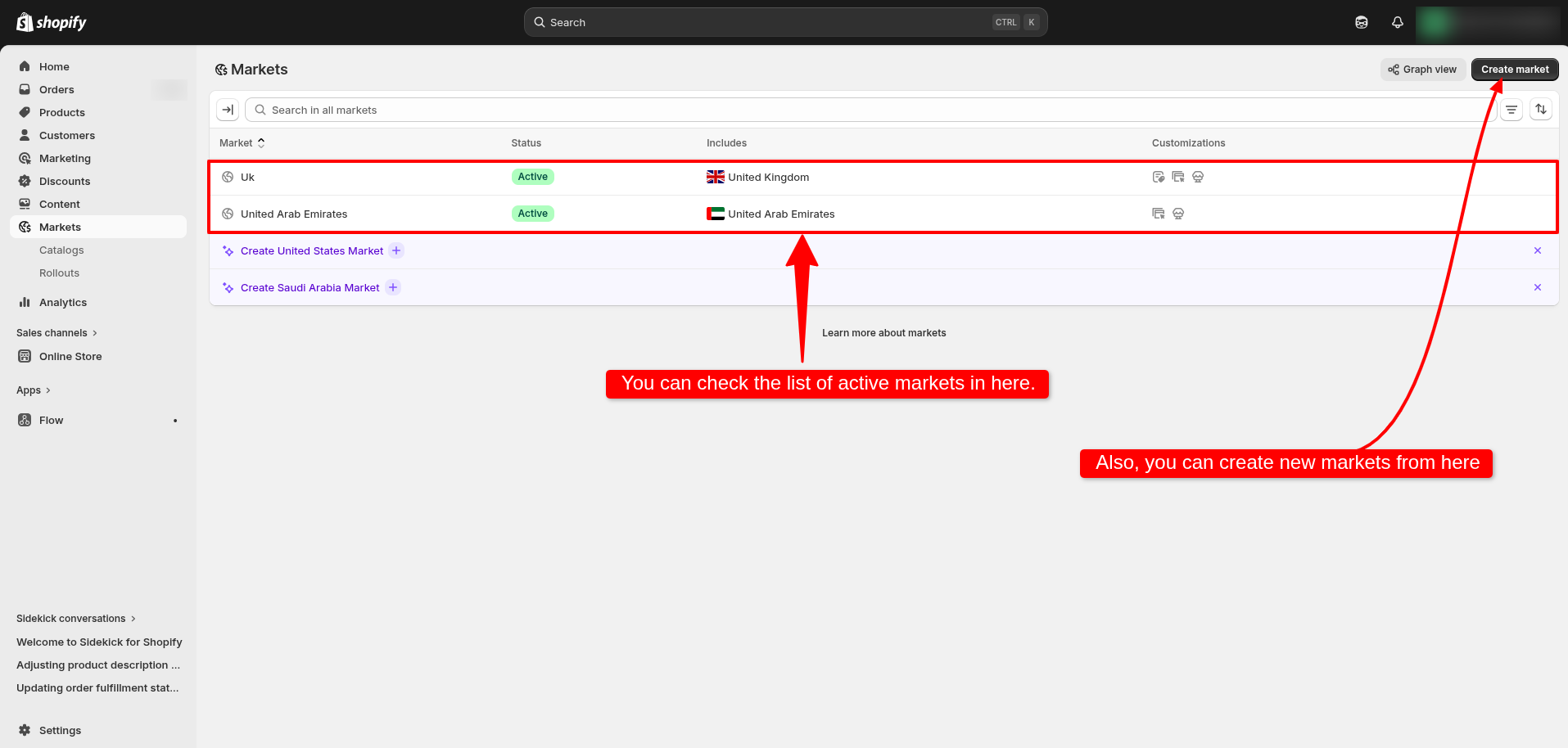
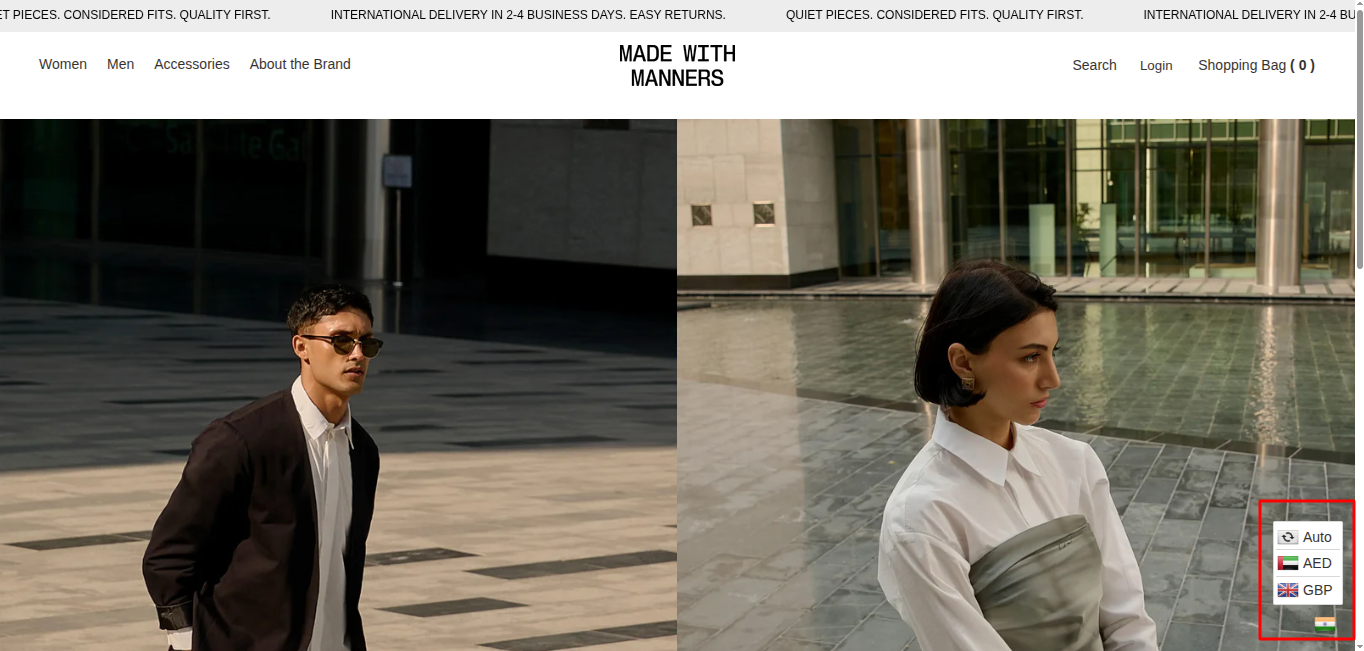
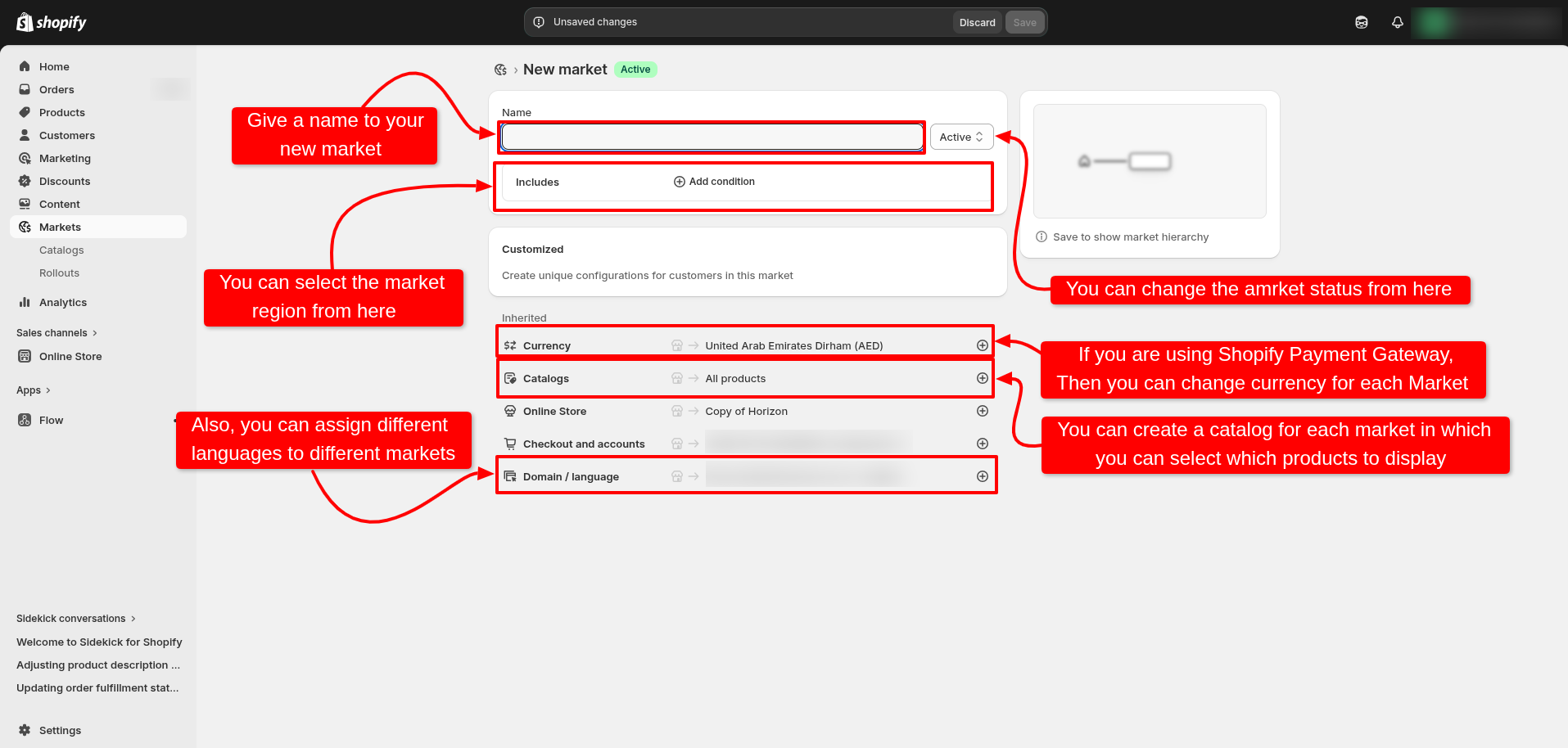
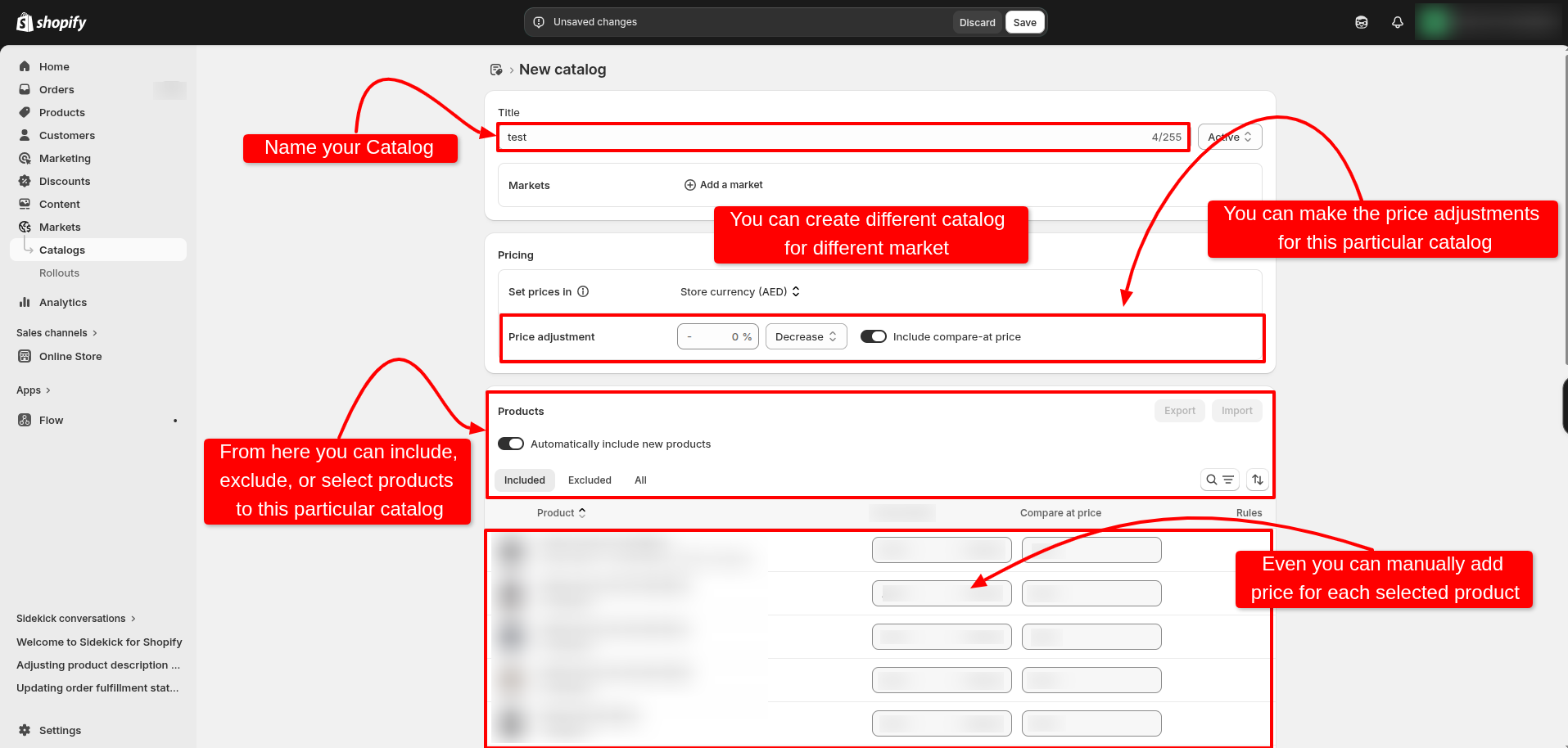
The Made With Manners team restructured their Shopify store around two distinct markets — each with its own currency, language settings, and URL structure. The UK remained the primary market; Dubai was built as a fully separate, first-class market with its own pricing, language, and checkout experience.
Shopify’s auto-currency conversion is a good starting point — but Made With Manners went further. Rather than letting the system produce prices like AED 312.47, they set market-specific price adjustments that created clean, local-feeling prices.
Dubai prices were adjusted upward by 12–15% to account for logistics, import handling, and regional margin requirements. Then prices were manually rounded to psychologically clean AED figures — AED 349, AED 895 — that read as intentional rather than auto-converted.
AED 312.47 looks like a converted price. AED 349 looks like a price that was set for Dubai. One builds trust. The other reminds the customer they’re a secondary market.
Made With Manners translated their Dubai storefront into Arabic using Shopify’s native translation features combined with Weglot for product descriptions. Right-to-left layout was enabled across the UAE market. Checkout, confirmation emails, and product pages all appear in Arabic by default when a browser locale indicates a UAE-based visitor — with a clean English toggle for bilingual customers.
But they made one deliberate exception: product names stayed in English.
“Saffiano Leather Tote” didn’t become “حقيبة توت من جلد السافيانو”. The product name stayed in English. The description, the care instructions, the navigation, the checkout — all Arabic. But the product name stayed.
Dubai customers search Google in a mix of Arabic and English. They search for ‘Italian leather bag Dubai’ and ‘حقيبة جلد إيطالي دبي’ — but the product category terms they search for are often in English. Translating product names would have buried those pages in UAE search results.
The UK market uses Shopify Payments as the primary gateway — giving UK customers Apple Pay, Google Pay, Klarna, and Shop Pay at checkout automatically.
The UAE is outside Shopify Payments’ supported territory, so the team configured a regional gateway (Telr) for Dubai transactions, with Tabby added as a buy-now-pay-later option. Cash on delivery was also enabled — still widely expected in the UAE even for premium purchases. Apple Pay works in the UAE through the regional gateway for customers on iOS.
The changes rolled out over a six-week period. The Arabic Dubai market went live first, followed by AED pricing adjustments and payment configuration. Within 90 days, the numbers had moved significantly.
The cart abandonment drop was the most immediate signal. UAE customers who had been getting to checkout and leaving — likely hitting the payment page and finding nothing familiar — were now completing purchases. The average order value from Dubai jumped significantly too: AED 1,150 per order, roughly equivalent to £250, compared to the £68 average from UK customers for the same products.
Dubai customers, it turns out, tend to buy more per order when they trust the store. The premium positioning that Made With Manners had built translated exceptionally well to a city renowned for its appetite for high-quality Italian goods and luxury lifestyle products.
“Setting up a proper Arabic market for Dubai wasn’t just about currency — it changed how UAE customers trusted the brand. When they saw prices in AED and could read in Arabic, the hesitation disappeared.”
— Made With Manners — Founder
The Arabic SEO results took longer but proved equally significant. Product pages optimised with Arabic meta titles and descriptions began ranking in Google.ae within four months. By month six, the brand was receiving over 1,400 monthly organic visits from UAE search — traffic that hadn’t existed at all before the market restructure.
Sumit Bula • Account Manager, ControlF5 • Made With Manners Project
What made this project stand out was how quickly the client trusted the process. When we recommended going Arabic-first — not just adding a language toggle — there was some hesitation initially. Premium Italian brands often worry that an Arabic-default store might dilute the brand’s European feel. We walked them through the data: UAE luxury shoppers don’t choose between cultural identity and aspirational brands. They expect both. Once the client saw the Arabic storefront in context, they were fully on board.
The AED pricing work was equally important. We didn’t just apply a flat conversion — we rebuilt the pricing logic for Dubai specifically, accounting for import margins, local competitor benchmarks, and the psychology of premium pricing in the UAE market. The AED 1,150 average order value we saw post-launch wasn’t an accident. It was the result of positioning the brand at the right price point for that customer, in their currency, on their terms.
Personally, this is one of the most satisfying market setups I’ve managed at ControlF5 — because the results came from doing the detail work properly, not from shortcuts.
Qatar’s Most Celebrated Online Toy Store
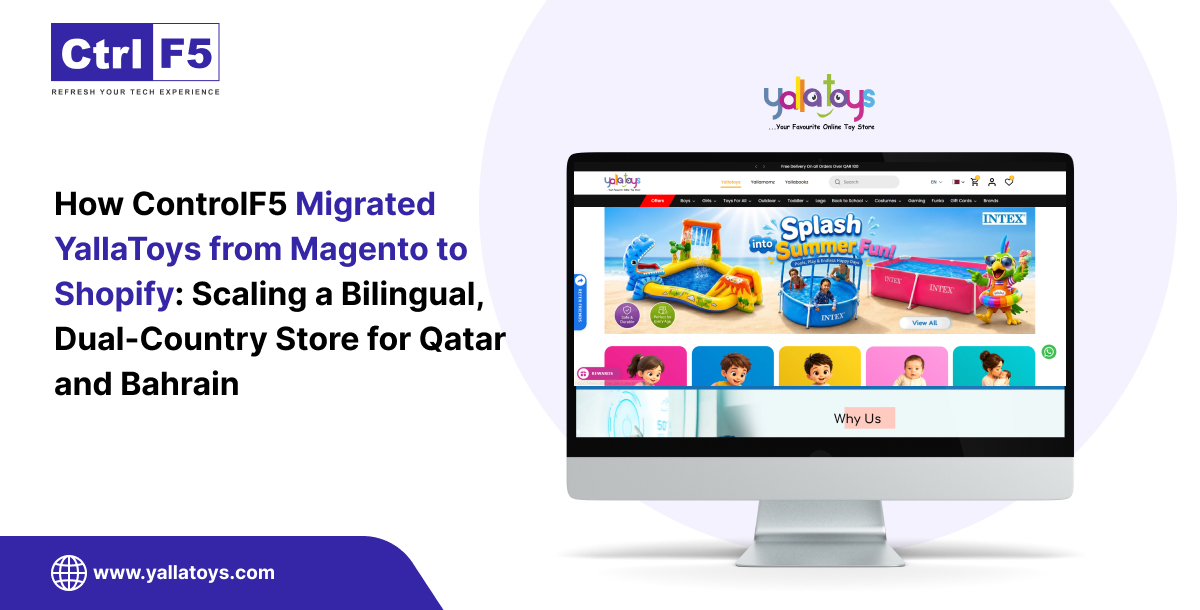
Yalla Toys was built for one purpose: to make premium toy shopping as easy and joyful as the toys themselves. Founded in Qatar, the brand has become the go-to destination for parents across the Gulf looking for LEGO, Barbie, Hot Wheels, KidKraft, and more.
The name says it all. Yalla — the Arabic word for ‘let’s go’, used across the Gulf as an expression of enthusiasm and urgency — captures exactly what shopping for toys feels like when you’ve got an excited child next to you. The brand is warm, energetic, and deeply embedded in Gulf parenting culture.
They launched in Qatar. Then expanded to Bahrain — a natural next step given the cultural and commercial ties between the two countries, and the strong demand for premium international toys from Bahraini families.
Two markets. Two currencies. One language with two modes. One Shopify store. Getting that to work properly — and making every Bahraini customer feel as at home as a Qatari one — was the challenge.
Yalla Toys’ Bahrain expansion challenge was deceptively simple on paper — same region, same language, similar culture. But Qatar and Bahrain are distinct markets in ways that matter deeply at checkout. Different currency (QAR vs BHD). Different banking infrastructure. Different local payment expectations. Bahrain’s BenefitPay network is as embedded there as Q-Pay is in Qatar — and a Bahraini customer who doesn’t see BenefitPay at checkout notices immediately.
At the same time, both Gulf markets had their own language friction to resolve. Qatar and Bahrain customers move between Arabic and English constantly — reading in Arabic, then switching to English when they want to look up a specific LEGO set number or check a brand name. An English-only checkout, even for customers fluent in English, creates a subtle signal that the store wasn’t designed with them in mind.
“We knew our customers spoke Arabic. We just assumed they were comfortable buying in English. Turns out, they weren’t. The moment we launched Arabic Markets properly, our conversion rate jumped overnight.”
— Yalla Toys — coo
The payment picture was the most urgent fix. Qatar customers expect Q-Pay and Tabby. Bahrain customers expect BenefitPay. Both markets still expect cash on delivery as an option — even for premium orders. A single-gateway setup serving both markets equally serves neither one well.
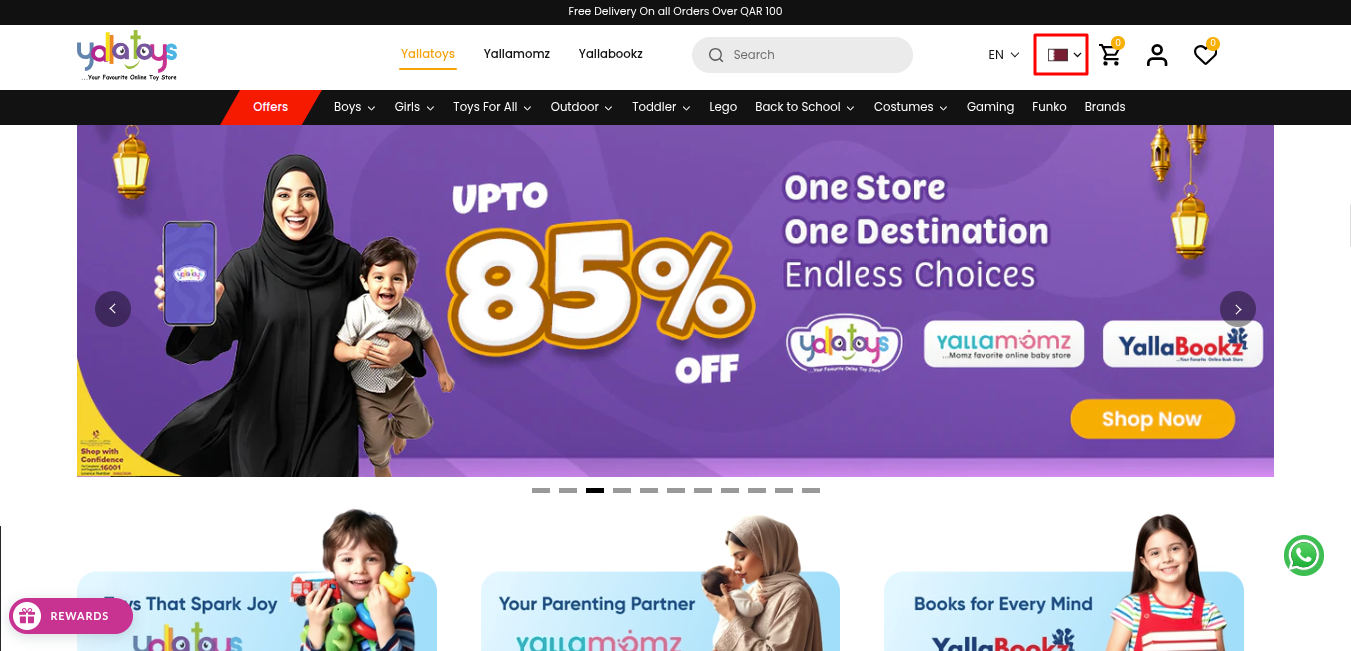
Yalla Toys restructured their Shopify store into two clearly separated Gulf markets, each configured to feel native to its region — not adapted from somewhere else, but built specifically for that customer.
The most important design decision Yalla Toys made was how they handled language. Rather than building separate Arabic and English sites, they built Arabic-first Gulf markets with a visible English toggle.
This matches how Gulf parents actually shop. A mother in Doha might read the homepage in Arabic, switch to English to check the product name of a specific LEGO Technic set, then switch back to Arabic to read the delivery information. The toggle makes that flow natural rather than disruptive.
Right-to-left layout was implemented throughout — navigation, product grids, checkout, and confirmation emails all respect RTL when Arabic is selected. This sounds like a small detail. For Arabic readers, it’s the difference between a store that feels native and one that feels broken.
Every toy brand name stayed in English on Arabic pages. LEGO. Barbie. Hot Wheels. NERF. Gulf parents search for these names in English — ‘LEGO Qatar’, ‘Barbie Doha’ — so transliterating them into Arabic would have destroyed the store’s search visibility in the very markets it was trying to serve.
Yalla Toys set market-specific pricing for each region rather than relying on automatic currency conversion. The principle was simple: a price should look like it was set for that market, not calculated from somewhere else.
QAR 899 reads as a deliberate price. QAR 897.34 reads as a conversion. Bahrain’s higher-value BHD currency requires even more care — small price differences matter more at that denomination, so the team set precise BHD pricing for every product category.
Since Shopify Payments isn’t available in Qatar or Bahrain, Yalla Toys built a regional payment setup using Telr as the primary gateway — supporting both QAR and BHD transactions — with market-specific local payment methods layered on top.
Tabby — the Gulf’s leading buy-now-pay-later provider — was enabled for both Qatar and Bahrain markets. For a toy store where a full outdoor play set can run QAR 13,000 or more, BNPL isn’t a nice-to-have. It’s what makes the purchase possible for many families.
One of the most underrated wins in Yalla Toys’ market setup was configuring shipping rates to display in each market’s local currency at checkout — rather than in the store’s base currency with a conversion note.
Qatar customers see shipping options priced in QAR, with delivery windows that reflect actual local logistics timelines. Bahrain customers see BHD rates with Bahrain-specific delivery estimates. It sounds obvious. But most multi-market Shopify stores get this wrong, and the result is a checkout that creates doubt precisely when confidence matters most.
The results from Yalla Toys’ market restructure were swift — the changes addressed friction that already existed in markets where demand was already proven. Within 90 days of the Bahrain market going live with proper BHD pricing, Arabic-first layout, and BenefitPay at checkout, the numbers had moved decisively.
Bahrain share of revenue (up from 5%)
Arabic storefront conversion rate
Avg. basket for outdoor play sets
Qatar repeat purchase rate (up from 31%)
The Arabic conversion rate story is particularly telling. The English-language storefront for Gulf markets was converting at 2.2%. The Arabic storefront — serving the same products, the same prices, the same delivery promise — converted at 3.1%. That’s a 40% relative improvement from a language change alone.
The Bahrain market was the fastest-moving win. Going from 5% to 18% of total revenue within two quarters showed that Bahraini customers had been there all along — browsing, wishing, not quite committing. The Arabic-first storefront with BHD pricing and BenefitPay at checkout gave them the signal they needed: this store was built for them.
“The Arabic storefront was a game changer. We knew our customers spoke Arabic — we just assumed they were comfortable buying in English. The moment we launched it properly, conversion jumped overnight.”
— Yalla Toys — coo
Sumit Bula • Account Manager, ControlF5 • Yalla Toys Project
Yalla Toys is one of the projects I’m most proud of managing, because the complexity was hidden in plain sight. On the surface, Qatar and Bahrain look like a straightforward GCC expansion — similar culture, shared language, geographically close. In practice, the payment infrastructure difference alone required us to build an entirely separate checkout experience for Bahrain. BenefitPay integration isn’t something you bolt on at the end. It has to be woven into the market setup from day one, or you end up with a Bahraini customer reaching checkout and feeling like they’ve been forgotten.
The Arabic conversion data — 3.1% vs 2.2% English — is the number I always come back to when clients ask whether the localisation work is worth the effort. That 40% improvement came entirely from language and layout. Same products. Same prices. Same delivery speed. Just Arabic, RTL, and a checkout that felt native. That’s a meaningful business result from what is, fundamentally, a trust signal.
The Tabby integration for higher-value orders was my recommendation — and watching it move the needle on large outdoor play set purchases (QAR 13,000+) was a genuinely satisfying outcome. When BNPL meets a high-intent parent in the right market, the results speak for themselves.
Looking across both case studies, five decisions stand out as the ones that made the difference between a multi-market store that technically exists and one that actually converts.
Made With Manners didn’t bundle Dubai into a vague ‘International’ market. Yalla Toys didn’t group Qatar and Bahrain into a ‘Gulf’ catch-all. Each market got its own currency, its own pricing, its own URL — and its own first-class experience. That specificity matters operationally (AED, QAR, and BHD all behave differently), but it matters symbolically too. A customer who sees their city or country called out specifically feels seen.
Both brands made Arabic the default language for Gulf markets rather than making it a buried toggle option. This is the difference between welcoming Arabic-speaking customers and merely accommodating them. When Arabic is default, the first impression is localised. When it’s a toggle buried in a footer, the first impression is still the English store.
Both brands made the same counterintuitive decision: translate everything except product and brand names. Made With Manners kept ‘Saffiano Leather Tote’ in English on Arabic pages. Yalla Toys kept LEGO, Barbie, and Hot Wheels in English throughout. The reason is simple search data — Dubai customers search for ‘Italian leather bag Dubai’ in English; Doha parents search ‘LEGO Qatar’ in English. Translating those terms collapses organic search visibility in the exact markets both brands were trying to reach.
Auto-currency conversion produces prices that look calculated. Made With Manners set clean AED figures for Dubai; Yalla Toys set deliberate QAR and BHD prices for each Gulf market. The result: prices that look intentional, not computed. Customers notice — not consciously, but they do. AED 349 reads as a considered price. AED 312.47 reads as a conversion. One builds trust, the other quietly erodes it.
Made With Manners used Shopify Payments for their UK market (where it works brilliantly) and Telr with Tabby for Dubai (where Shopify Payments isn’t available). Yalla Toys used Telr for both Gulf markets, then layered Q-Pay for Qatar and BenefitPay for Bahrain on top. No one tried to find a single gateway that served every market. The result: every customer sees a checkout that feels built for exactly where they are.
Multi-market Shopify isn’t complicated. But it requires one thing that’s easy to skip: the willingness to treat every market as if it were your only market.
Made With Manners and Yalla Toys are different brands, serving different customers, with different product categories and different market footprints. One bridges Dubai and the UK. The other goes deep in Qatar and Bahrain. But both arrived at the same conclusion: the customers were already there. The traffic was already coming. What was missing was a store that made those customers feel like they’d arrived somewhere built for them.
Once that changed — the currency, the language, the right-to-left layout, the familiar payment option, the shipping rate quoted in their own currency — the conversion followed naturally.
“The customers were already there. What was missing was a store built for them.”
—Shared lesson across both brands
For any Shopify brand looking to reach Gulf markets, the setup is well within reach on both Advanced and Shopify Plus plans. The technical steps are documented. The tools exist. The only remaining question is whether you’re willing to go the full distance — not just switching a currency flag, but genuinely building a local experience.
The data from both of these brands suggests it’s worth it.