

A subscription is a promise the customer makes to come back. Every renewal is them keeping that promise, and every cancellation is them quietly taking it back.
After working with Shopify stores for years, I have noticed that most brands put all their energy into getting that first promise and very little into keeping it alive.
The tricky part is that Shopify subscription churn rarely looks dramatic. Nobody storms out. A card expires, a few bags of coffee pile up on a shelf, a renewal charge arrives when the customer least expects it, and one by one, subscribers slip away.
The good news is that almost every one of these exits has a clear reason behind it, and most of those reasons can be fixed.
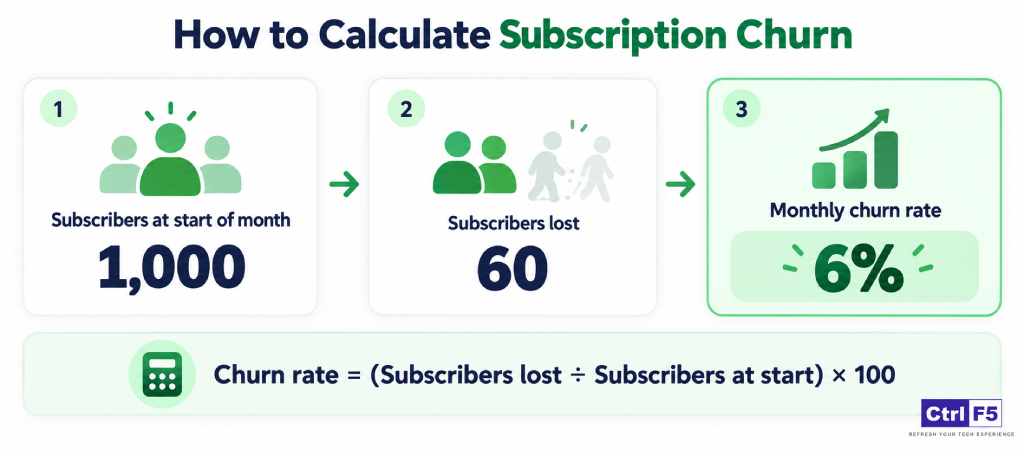
Subscription churn is the percentage of your subscribers who stop paying you during a given period. If you start the month with 1,000 active subscribers and 60 of them cancel or stop being billed, your monthly churn rate is 6%.
The formula is simple:
Churn rate = (Subscribers lost during the period ÷ Subscribers at the start of the period) × 100
What makes churn dangerous is the math of recurring revenue. A subscriber who stays for twelve months is worth twelve orders. A subscriber who leaves after two is worth two. When I help a Shopify store improve Shopify subscriber retention, we are not just saving one sale; we are protecting every future order that customer would have placed.
Not every cancellation is a decision. This is the first thing I explain to every Shopify merchant, because the fix depends entirely on which type you are dealing with.
| Type of churn | What it means | Common examples | How it is fixed |
| Voluntary churn | The customer actively chooses to cancel | Too much product, price concerns, lost interest, bad experience | Better value, flexibility, communication, and retention offers |
| Involuntary churn | The subscription ends without the customer choosing it | Expired card, insufficient funds, bank decline, outdated billing details | Payment recovery systems, retries, and card update reminders |
There is no single universal benchmark, because churn depends heavily on the product category, price point, and delivery frequency. In my experience, many direct to consumer subscription brands see monthly churn somewhere in the mid single digits, while consumable categories with high competition can run closer to 10% or above. Replenishment products like coffee, pet food, or supplements tend to retain better than “surprise box” style subscriptions, because people actually use them up.
Over the years, I have audited enough Shopify subscription stores to notice that cancellations almost always trace back to the same handful of causes. Here is a quick overview before we go deeper into each one.
| Churn cause | Churn type | Core fix |
| Failed payments and expired cards | Involuntary | Dunning and payment recovery |
| Product overload | Voluntary | Skip, pause, and frequency control |
| Weak perceived value | Voluntary | Subscriber perks and loyalty rewards |
| Confusing customer portal | Voluntary | Clear self-service account controls |
| Surprise charges | Voluntary | Renewal reminders and transparent pricing |
| Product fatigue | Voluntary | Swaps, variety, and add-ons |
| Poor onboarding | Voluntary | Welcome flow and expectation setting |
| No cancellation save flow | Voluntary | Exit surveys and retention offers |
I remember reviewing the data for a supplement brand that believed it had a product problem. Subscribers were “leaving” in large numbers. When we separated the cancellations by reason, a large chunk of them turned out to be failed renewals. Cards had expired, banks had declined charges, and those customers simply dropped out of the system without a single reminder.
This is involuntary churn, and it is the easiest revenue to win back because the customer still wants your product.
How to fix it:
Most major Shopify subscription apps offer some form of failed payment handling, but the depth of these features varies a lot from one app to another.
If you are still choosing a tool, my guide to the best Shopify subscription apps breaks down which ones handle payment recovery well. Whichever app you use, the key is to actually configure it rather than leaving the default settings untouched.
Losing subscribers to failed payments?
ControlF5 can set up your dunning and payment recovery the right way.
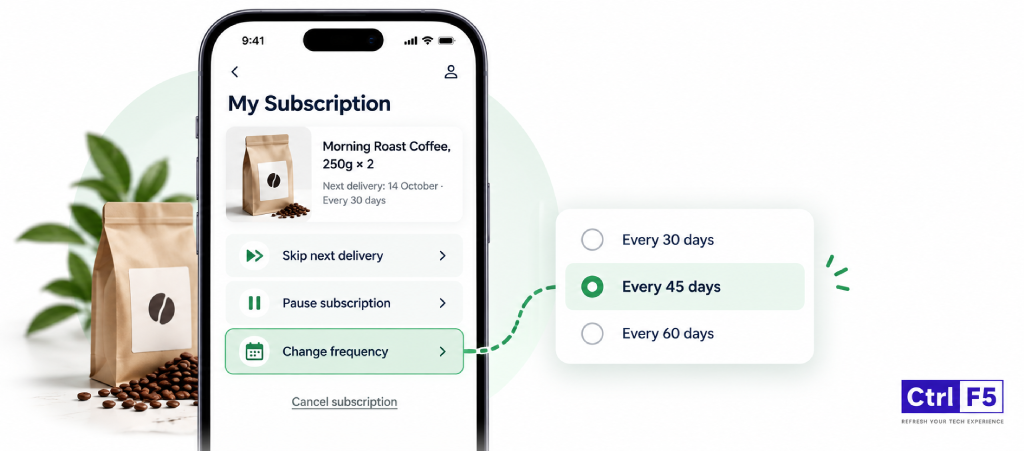
This is probably the most common cancellation reason I see on exit surveys. A customer signs up for monthly coffee, but they travel for two weeks, and suddenly there are two unopened bags on the shelf. Their solution is to cancel, because cancelling is the only button they can find.
The customer did not stop liking your product. They just needed it at a different pace.
How to fix it:
Most of these controls are decided when you first build your subscription offer, so it pays to get the setup right from day one.
If you are just getting started, my step by step guide on how to set up subscriptions on Shopify walks you through choosing delivery frequencies, discounts, and plan options that give customers flexibility from the start.
How to fix it:
| Weak value approach | Strong value approach |
| 15% off the first order only | Ongoing discount plus free shipping on every renewal |
| No recognition for loyal subscribers | Milestone gifts after a set number of orders |
| Same price as one time buyers after month one | Exclusive subscriber pricing or early access |
Here is a story I see repeat itself. A subscriber wants to change their delivery address because they are moving. They log in, cannot find where to do it, get frustrated, and email support. Support takes two days to reply. By then, the subscriber has decided this is too much hassle and cancels.
The customer portal is the control room of a subscription. If it is hard to use, customers feel trapped, and trapped customers leave.
How to fix it:
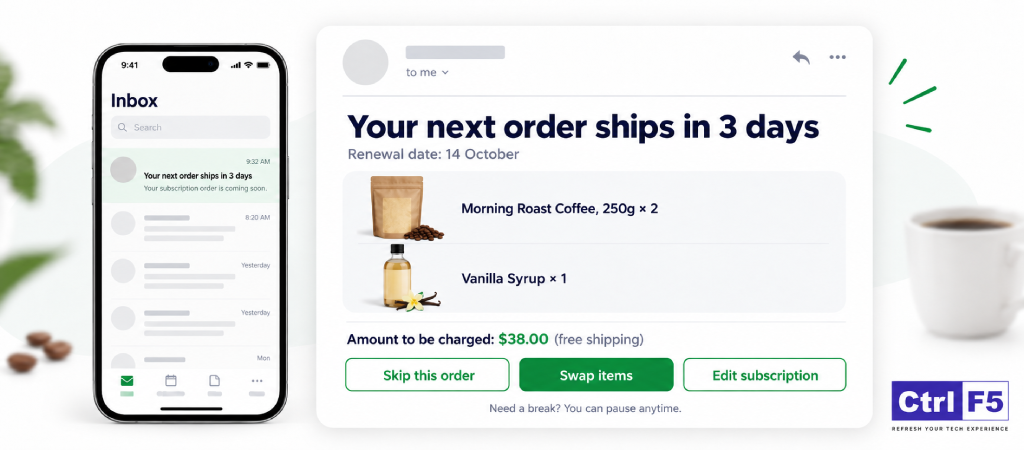
Nobody likes seeing an unexpected charge on their bank statement, even for something they signed up for. A customer who forgets about their subscription and suddenly gets charged often feels tricked, and that feeling leads straight to cancellation, sometimes with a chargeback attached.
How to fix it:
That upcoming order reminder is one of the most underrated tools for Shopify subscriber retention. It feels like it might trigger cancellations, but in my experience it does the opposite. It turns a potential cancellation into a skip or a frequency change.
Even a product people love can become boring after the sixth identical delivery. I once worked with a snack brand whose subscribers loved the first few boxes but drifted away around the fourth month. The product was great. The experience had simply become predictable.
How to fix it:
Many subscribers cancel because they never fully understood how to use the product, how long it should last, or when they would see results. A skincare customer who expects visible results in a week and does not see them will often cancel before the product has had a chance to work.
How to fix it:
| Onboarding stage | What to send | Goal |
| Right after signup | Welcome message and how the subscription works | Build confidence |
| When the order ships | Usage tips and what to expect | Prepare the customer |
| After delivery | Check in and support contact | Catch problems early |
| Before the second renewal | Reminder with skip and swap options | Prevent surprise charges |
The final cause is often the most costly. When a customer clicks “cancel,” many Shopify stores simply let them go with no questions asked. That moment is actually your last and best chance to understand what went wrong and offer a better option.
I want to be careful here, because there is a wrong way to do this. Making cancellation deliberately difficult frustrates customers, damages your brand, and can create legal problems in some regions. The right approach is a short, respectful flow that offers genuine alternatives.
How to fix it:
A well-designed cancellation flow is one of the most effective ways to reduce subscription cancellations Shopify brands lose to small, fixable frustrations.
Not sure what is driving your cancellations?
Let ControlF5 find the real cause of your Shopify subscription churn.
You cannot fix what you are not measuring. Here are the numbers I always ask Shopify merchants to track.
| Metric | What it tells you | Why it matters |
| Monthly churn rate | Percentage of subscribers lost each month | Your core health indicator |
| Involuntary churn share | How much churn comes from failed payments | Shows how much revenue is recoverable |
| Customer lifetime value (LTV) | Average total revenue per subscriber | Tells you how much you can spend to acquire one |
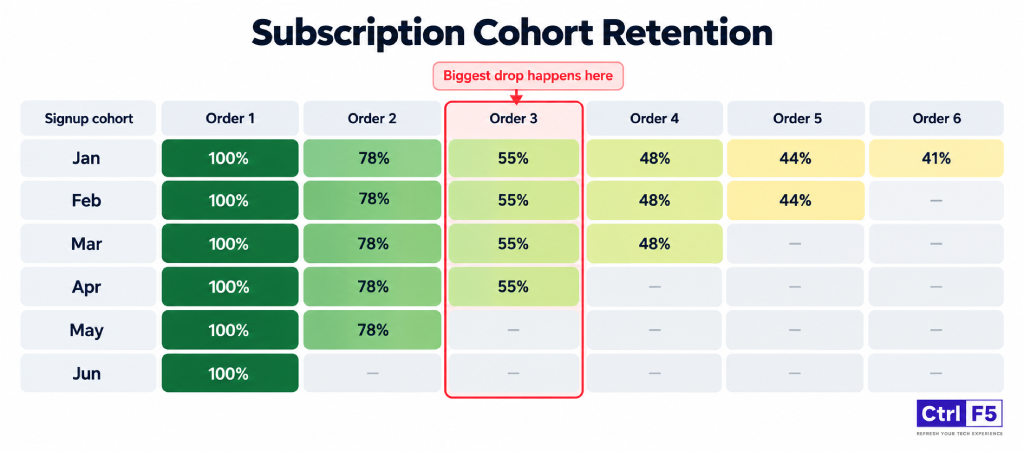
| Cohort retention | How subscribers who joined in the same month behave over time | Reveals when people typically drop off |
| Skip and pause rate | How often subscribers use flexibility options | Indicates saved cancellations or hidden dissatisfaction |
| Save rate | Percentage of cancel attempts that end in a pause, skip, or offer acceptance | Measures how well your cancellation flow works |
Cohort retention deserves special attention. If you notice that most subscribers who leave do so right after their second or third order, you know exactly where to focus: onboarding, value, and frequency.
Subscribers usually show signs before they leave. Watch for:
When you spot these signals, reach out proactively with a helpful message, a product suggestion, or a small loyalty reward. Catching a subscriber before they reach the cancel button is always easier than winning them back afterwards.
The cheapest subscriber you will ever get is the one already on your list. You have paid to acquire them and they have trusted you with their card, yet keeping them is the part most stores leave on autopilot.
Treat retention as something you design. Look at where subscribers drop off, listen to why they leave, and fix that moment. Do this consistently, and Shopify subscription churn becomes a number you control, while stronger Shopify subscriber retention brings steadier revenue and more room to grow.
If you want a team that has already solved these problems for other subscription brands, ControlF5 can help. From smoother customer portals to smarter renewal communication and Shopify subscription app setup, we help you reduce subscription cancellations Shopify stores struggle with.
Book a free consultation with us today.
Question: Should I let customers cancel their subscription easily?
Answer: Yes. Hiding the cancel option or forcing customers through endless steps creates frustration, negative reviews, and potential chargebacks, and some regions have rules requiring easy cancellation. The better approach is a short, honest flow that asks why they are leaving and offers a relevant alternative, like a pause or a swap, before letting them go.
Question: How much does involuntary churn cost Shopify subscription stores?
Answer: It varies, but for many subscription brands, failed payments account for a meaningful portion of total churn. Because these customers never chose to leave, this is often the most recoverable revenue. A proper dunning setup with retries and card update reminders is usually the quickest win when you want to reduce subscription cancellations Shopify stores experience.
Question: How does shipping speed affect subscription cancellations?
Answer: More than most merchants expect. When a subscription order arrives late, the customer may run out of the product, buy it elsewhere, and start wondering why they are subscribed at all. Reliable fulfilment, clear tracking, and proactive messages about delays all help reduce subscription cancellations Shopify stores often blame on the product itself.
Question: Can I win back subscribers who have already cancelled?
Answer: Yes, and it is often easier than finding brand new customers. Send a win back email a few weeks after cancellation that addresses their exit reason, such as a new flavour if they were bored or a flexible frequency if they had too much product. Former subscribers already know your product, so the right message at the right time can bring many of them back.
Question: How soon after signup do most subscribers cancel?
Answer: For many Shopify stores, the riskiest period is between the first and third orders, when customers are still deciding if the subscription is worth it. This is why onboarding, clear communication, and early value matter so much. Looking at your own cohort data will show you exactly when your drop off happens.


Here’s how to customize your Shopify theme so every update keeps your design, your custom features and your app settings in place.
A Shopify store can look polished on a laptop and fall apart the moment someone opens it on a phone. Buttons slide under images, text
Most Shopify store owners I speak with already accept that upsells can lift order value. Where they get stuck is placement.